Throughout my 15+ years of playing and being involved in the world of gambling, I have witnessed countless big wins as well as devastating losses, each shaped by different playing styles and approaches.
I’ve also seen just how thin the line is between the excitement of a huge win and the devastating feeling that comes when everything seems to fall apart.
In this industry, knowing when to play, how to manage your bankroll, and especially how to control your emotions is extremely important. However, knowing when to take a break and, as we often say, “pull the handbrake,” may be even more important than playing itself or managing your balance.
If you’ve ever caught yourself chasing losses or thinking, “just one more spin,” then you’ve already stepped into dangerous territory.
In this blog, I want to help every player understand when and how to take a break, protect any profits they’ve earned, and avoid falling into one of the biggest traps of the gambling industry.
The (Chasing Losses) Syndrome, Why It’s the Most Dangerous Trap for Your Bankroll?
One of the things I hear most often is that players find it hardest to stop when they’re losing.
That’s when emotions take over. Frustration, anger, and the bitter feeling of being in the red create overwhelming pressure to recover those losses at any cost, and to do it immediately.
At that point, your emotions are in control, while logic and rational thinking are pushed aside. The only thought that remains is: “Just one more deposit, and I’ll win it all back. I’ll get even.”
This mindset is exactly what leads players deeper into the trap.
In this section, I’ll explain why your brain stops thinking in terms of probability and strategy during these moments, and how to recognize the warning signs before your bankroll disappears.
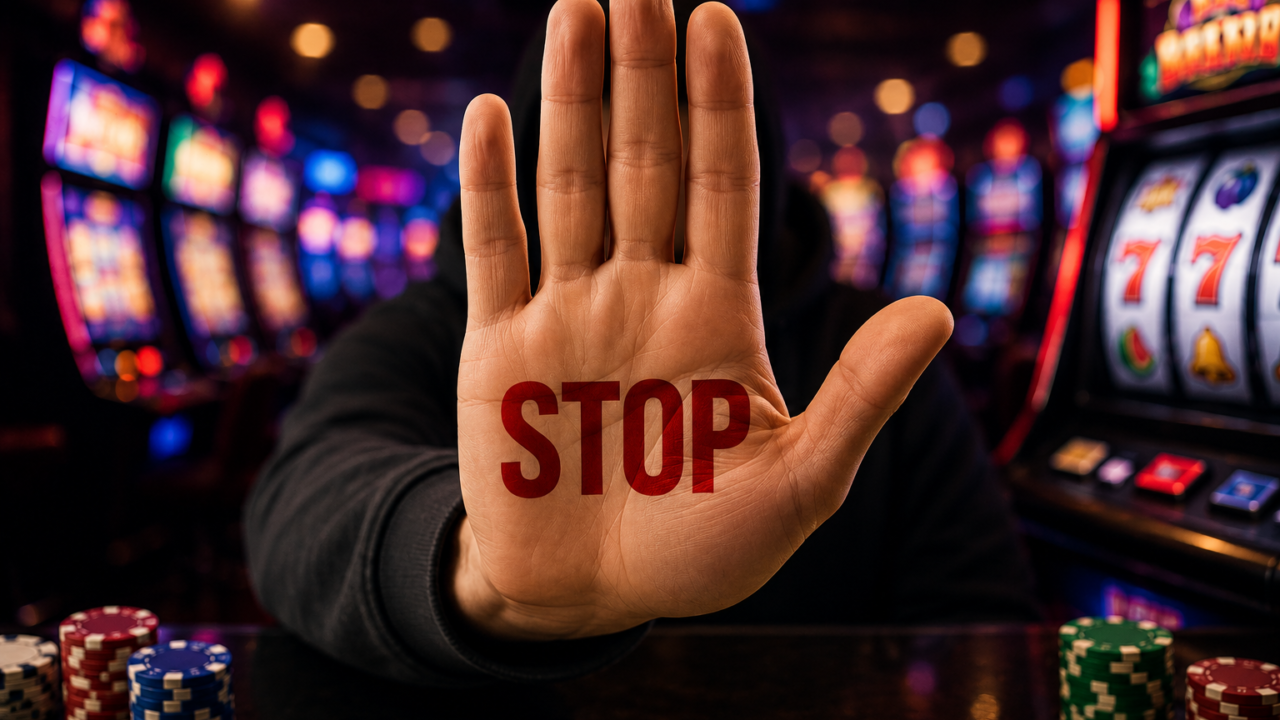
Recognize the Warning Signs, When It's Time to Say (STOP)
Taking a break is not a defeat it’s a sign of self control and one of the most important ways to protect your bankroll from emotional decisions.
If you look at the numbers, the situation is simple: you’re losing. But stepping away today can save you from making things even worse. It may mean accepting a loss for now, but it also gives you the opportunity to come back another day with a clear mind, make better decisions, and potentially turn things around for a profit.
Here are three warning signs that tell you it’s time to take a BREAK.
1. Tunnel Vision
This is the moment when you stop paying attention to your bankroll and keep hitting the spin button, hoping that the next spin will finally bring that big win or the long-awaited Bonus Round. Your focus narrows to a single goal, while everything else becomes irrelevant.
2. Emotional Instability
If you notice physical signs such as tense shoulders, a racing heartbeat, sweating, or intense stress, your body is telling you that your cortisol levels have increased. When you’re already losing, this stress response doesn’t help it makes it much harder to think clearly and make rational decisions.
3. Losing Track of Time
Maybe you planned to play for 30 to 60 minutes, but suddenly you realize you’ve been playing for three hours. That’s a strong sign that it’s time to step away and take a break.
One strategy I personally use is to take a 10-minute break after every 30 to 45 minutes of play. During that break, I give myself time to clear my head and honestly assess the situation. I check whether I’m ahead or behind, estimate how many spins I’ve played, think about how close I came to triggering a Bonus Round, and simply take a moment to drink a glass of water, use the restroom, or have something to eat.
These short breaks help me stay in control of my bankroll and evaluate the session with a clear mind. More importantly, they allow me to enjoy the game without letting it become a source of pressure or stress.
Bankroll Management as a Lifestyle,Treating Your Crypto Balance Like a Portfolio!
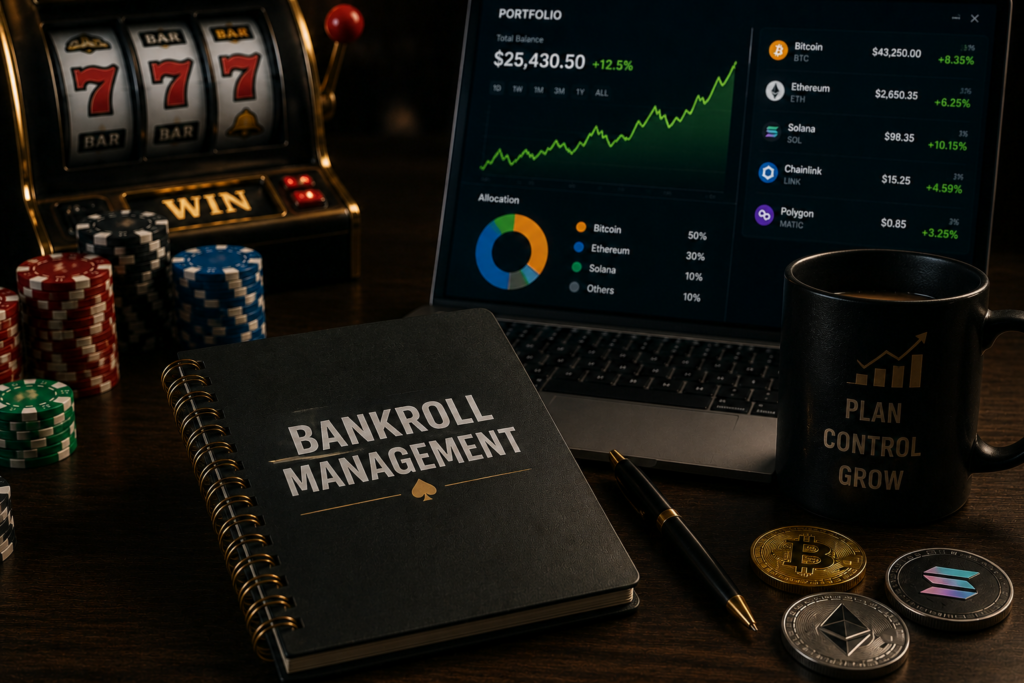
What do a large number of players get wrong? They make the mistake of looking at their balance as game points rather than treating it as real money.
Look at your bankroll as real money because that is exactly what it is! It is true that this money is used for playing, but at the same time, you can use it to generate profit, increase its value, and later use it to buy cryptocurrency or something else that brings you happiness.
When it comes to (stop loss limits), having one is extremely important. Just as you would not invest your entire capital into a single cryptocurrency (and you really shouldn’t), you should not enter a single SLOT SESSION with your entire balance without a clear and organized loss limit.
When you treat your bankroll with the same seriousness as you treat your investments, gambling stops being a completely unpredictable adventure and becomes a more controlled process. Of course, this does not guarantee profit, because these are still games of chance, but it can improve your chances and, most importantly, guarantee a better overall gaming experience.
Here are some of my blogs that can help you further:
Responsible Gambling Checklist, Pre Game Routine to Avoid Unnecessary Risks!
Before you start playing and make that DEPOSIT, ask yourself these three key questions:
Am I rested and focused?
What is my Stop Loss for this session?
How much time do I plan to spend playing?
These are the three questions I personally make sure to ask myself before every gaming session.
I never play when I am stressed, tired, or under the influence of alcohol, because in those situations, the decisions I make can only work against me.
I always set a clear Stop Loss an amount I am willing to lose and once I reach that limit, I stop. I do not go below it during that session.
Of course, it is extremely important not to put your monthly budget at risk. This means that the money you set aside for gaming should be money you can afford to lose without creating financial problems for yourself during the month.
I also set a specific playing time. When those 30 to 45 minutes are over, I take a break and decide whether I want to continue playing or end the session.
Conclusion, Control is your greatest advantage!
At the end of this blog, let’s summarize everything.
Slot games are, by nature, games of probability (games of chance), and your discipline is the one thing you can fully control.
The difference between those who play purely for entertainment and those who become more serious players lies in their ability to recognize their limits and respect their own rules.
Do not let your emotions control your decisions. Set your limits, follow your routine, and always play responsibly.
Believe me, your gaming experience will become less stressful and more relaxed, and as a result, you will create a much more positive experience and enjoy your time playing.
On this website, you will also find a TELEGRAM logo. By clicking on it, you can join my Telegram channel, where I share every Giveaway, every new blog post, and various other updates.
Our community is not extremely large yet, but believe me we are growing day by day.
Frequently Asked Questions (FAQ)
1. How do I define my ‘Stop-Loss’ limit before a session?
Your (Stop Loss) should be an amount you are 100% comfortable losing as a ‘cost of entertainment.’ It should be a small, fixed percentage of your total bankroll. Once you hit that number, you must stop immediately, regardless of how you feel, to protect your remaining capital.
2. Is it possible to ‘recover’ a bad session by increasing my bets?
No. Increasing your bets to chase losses is the fastest way to lose your entire bankroll. Slot machines are independent events; the machine does not ‘owe’ you a win, and higher bets only accelerate your risk. A professional player accepts the loss as part of the game and moves on.
3. What should I do if I feel like I’m ‘in the zone’ but my session time is up?
If your session time is up, you stop. Being (in the zone) is often just a feeling driven by adrenaline, which clouds your judgment. Sticking to your time limit is the ultimate test of discipline. You can always come back another day when your head is clear and your focus is fresh.
Most Read Blogs
Responsible Gambling
Affiliate Disclosure