
Those of you who have been following me for a while and reading my blog posts can already see the kind of content I write about. I won’t pretend that some of my posts haven’t sparked your curiosity about gambling. At the same time, I’ve often reminded you to keep your bankroll under control, gamble for entertainment rather than to make extra money, and remember that gambling never guarantees a win!
In this blog, I want to go over a few important things once again, point out some common mistakes, and explain when gambling stops being fun.
The Illusion of Control!
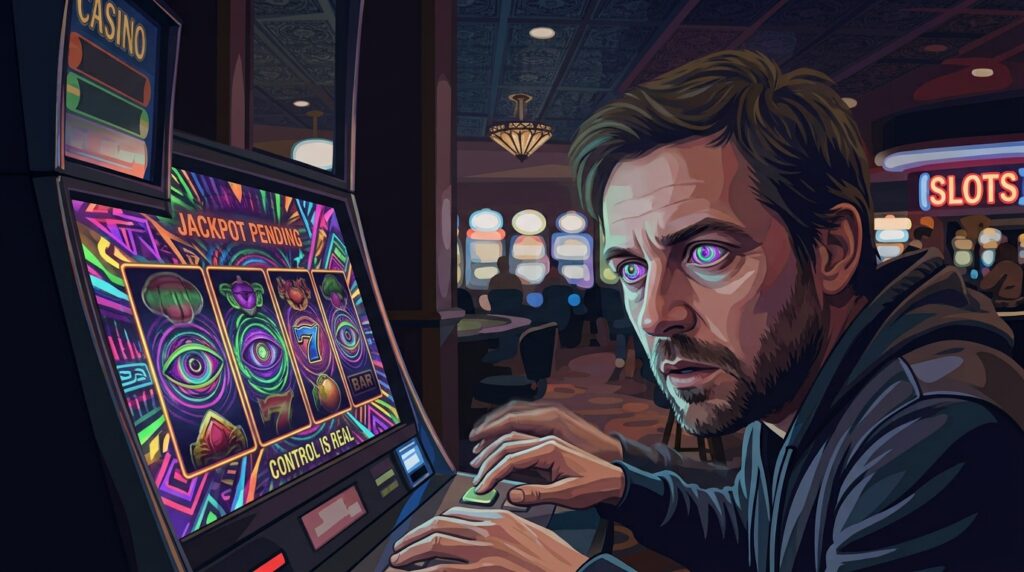
Image generated by AI
The biggest trap of all isn’t winning it’s the illusion of control!
Players often believe they’re in control of their gambling. They think they know how much they’re prepared to lose (or spend), and they stick to that limit. They also know how much they want to bet on each spin or round, depending on the game they’re playing, and they tell themselves they won’t go beyond that amount. They even decide how long they’re going to play and believe they’ll stop when that time is up.
But the truth is that everything I’ve just described is a big LIE!
The player genuinely believes they can stick to these rules, but it doesn’t take long for those good intentions to go out the window. Before they know it, they’re playing without any rules at all.
When you’re winning, your brain tells you (That’s it! Let’s keep going. It’s finally starting to pay out!)
But when you’re losing, a completely different story begins (“You’ve got to win that money back! Come on, it’s about to happen! Just one more spin!)
Both scenarios lead to the same outcome: the plan you started with falls apart, and, of course, your brain finds a way to justify your behavior.
Chasing Losses, A Fatal Mistake!
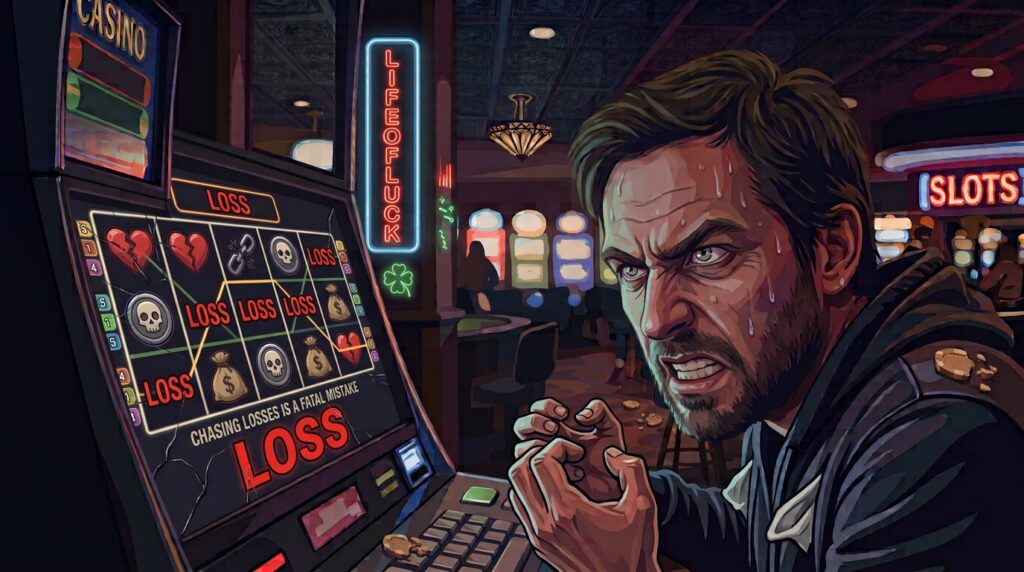
Image generated by AI
The moment the line of control becomes invisible, the player stops thinking about anything other than getting back to that famous ZERO the point where they’ve recovered all their losses. This is what chasing losses is all about.
At this point, any enjoyment of the game disappears. You’re no longer playing in a relaxed state of mind. Instead, you become tense, you start sweating, and if you’re a smoker, you might find yourself lighting one cigarette after another. You stop thinking about how much more you could lose. All that matters is getting your money back.
At that point, it’s fair to say you’re gambling out of frustration, not for fun.
You’re caught in a vicious cycle. Even if you manage to recover your losses, your brain immediately changes its tune: (There we go! Things are finally turning around. Now I can actually make some money!)
That’s exactly why I call it a vicious cycle.
When I first started gambling, many years ago, I experienced this myself. There were days when I’d lose money, win it back, lose it again, and recover it once more all in the same day!
That’s the vicious cycle I’m talking about. And when you’re caught in it, there’s no real self control left.
Why Does the Brain Change Its Perception?
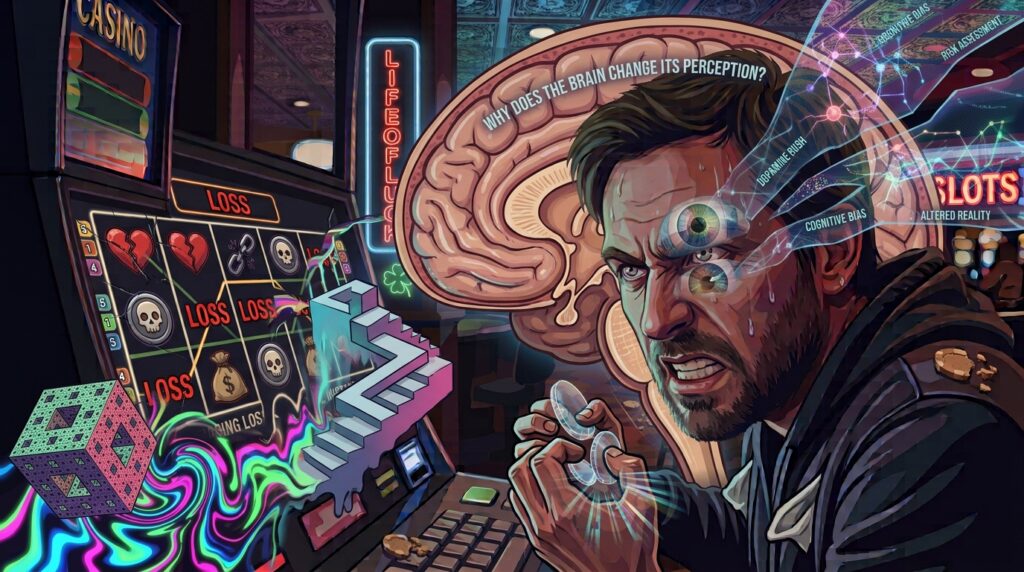
Image generated by AI
From a psychological perspective, gambling affects the brain through its reward system. Unpredictable rewards, varying payouts, and unexpected wins can trigger the release of DOPAMINE, a neurotransmitter involved in motivation, learning, and the anticipation of rewards.
Because every next outcome is uncertain, the brain remains highly alert, constantly anticipating the possibility of a win. You start focusing more and more on what might happen next, wondering whether the next spin or round will finally pay off.
This can easily lead you to abandon the plan you had at the beginning. What started as a game with clear limits can gradually turn into something very different, as the anticipation of a win takes over and your original rules become easier to ignore.
How Can You Develop Self Control?
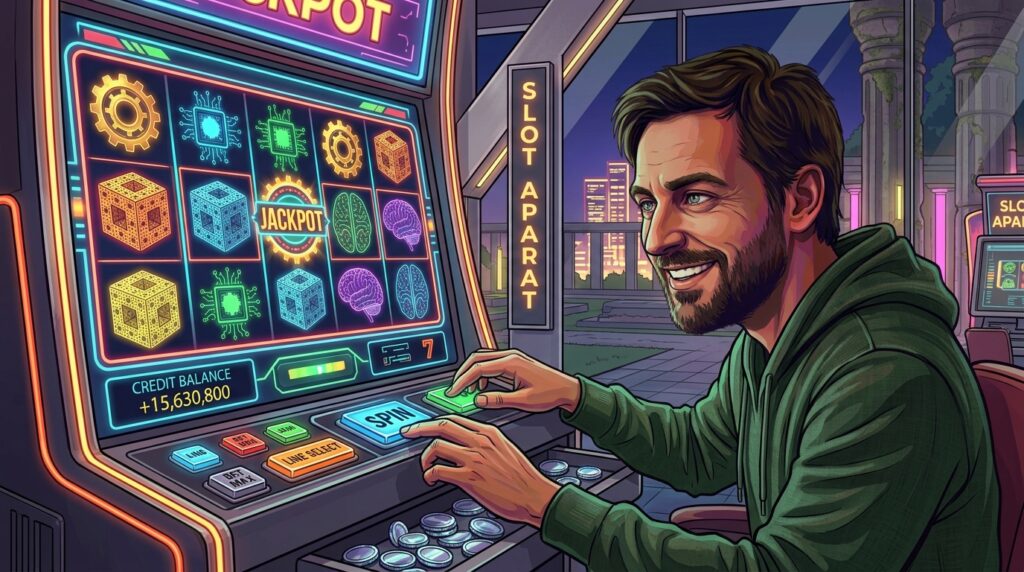
Image generated by AI
It’s extremely important to maintain that hypothetical line of control in other words, your self-control.
It’s easy to lose that control once you’re caught up in the game, and willpower alone simply isn’t enough! Instead, I’d recommend putting safeguards in place to help you stay in control.
Let’s go through them!
Money Is for Entertainment!
The money you set aside for gambling is there to pay for your entertainment! Just as you pay to watch a movie or enjoy dinner at a restaurant, you also pay to play.
Never expect to make a profit or gamble with the goal of making money! Play for entertainment only, and accept in advance that the money you bring with you may be gone by the time you leave.
Set Firm External Limits!
Always use loss limits, especially if you play online slots! You can also set a deposit limit, which I’d strongly recommend if you struggle with self control.
As for time, you can set a timer for a specific period and stop playing as soon as it goes off. However, I’d personally recommend relying more on the first two options than on a timer.
Never Gamble When You're Stressed or Emotional!
This might sound like a minor detail, but trust me, it’s extremely important!
Never gamble if you’re having problems at work, at home, or dealing with any other difficulties in your life. Gambling is not a solution, and it should never be used as a way to escape your problems!
You should also avoid gambling when you’re angry or frustrated. If you break this rule, all the other rules I’ve mentioned can easily go out the window. In that state of mind, you’ll struggle to stick to any of the limits you’ve set for yourself.
Conclusion, How I Personally Approach Gambling!
Image generated by AI
It’s extremely important to understand your own psychology if you want to keep gambling from becoming harmful.
If gambling is negatively affecting your finances, physical health, family life, or mental well being in any way, self control is essential. And if you can’t maintain that control, the best option may be to stop gambling altogether.
I know from experience that it’s easy to say, (Just stop gambling,) but actually stopping can be much harder.
Personally, I’ve become much more disciplined about my own gambling. First of all, I remind myself that I’m playing for enjoyment and entertainment, not to make a profit!
I also decide in advance how much money I’m willing to spend on gambling. That’s the amount I deposit for that day, week, or month, depending on how I plan to play.
I also decide how much I want to stake on each game. Will my stakes be higher or lower? If they’re higher, my playing session will potentially be shorter. If they’re lower, I can play for longer.
Next, I set a goal for how I want to play. For example, if I’m playing slots, will I take my time and wait for bonus rounds, or will I buy bonuses and play at a faster pace? The length of my session can also depend on how the game unfolds.
The important thing is to make these decisions before you start playing or deposit any money. Decide how much you’re going to deposit, what you’re going to play, how you’re going to play, how much you’ll stake per game, and how long you’ll play.
Set your limits in advance and stick to them. However, remember that even a well planned approach cannot eliminate the risks associated with gambling.
I’ll say it again: gambling is ENTERTAINMENT, not a way to earn EXTRA MONEY!
And always be aware that if you lack self-control, this form of entertainment can end very badly.
If you’re already experiencing problems because of gambling or feel that you’ve developed a strong gambling addiction, please consider seeking professional help from a qualified healthcare professional or mental health specialist.
There’s no shame in asking for help! We’re all human, and our brains are complicated things that can sometimes be surprisingly easy to fool.